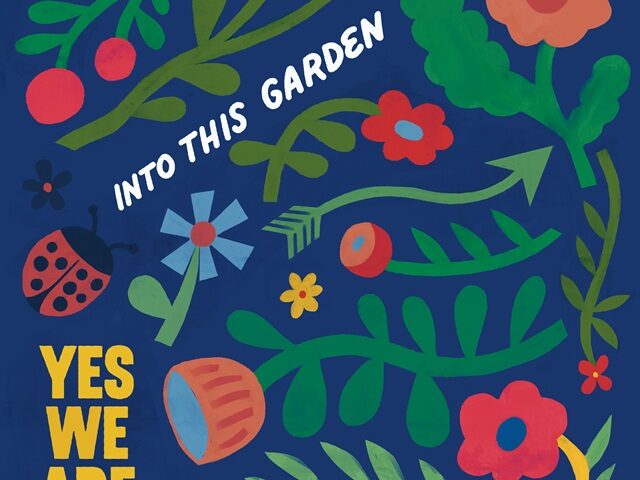


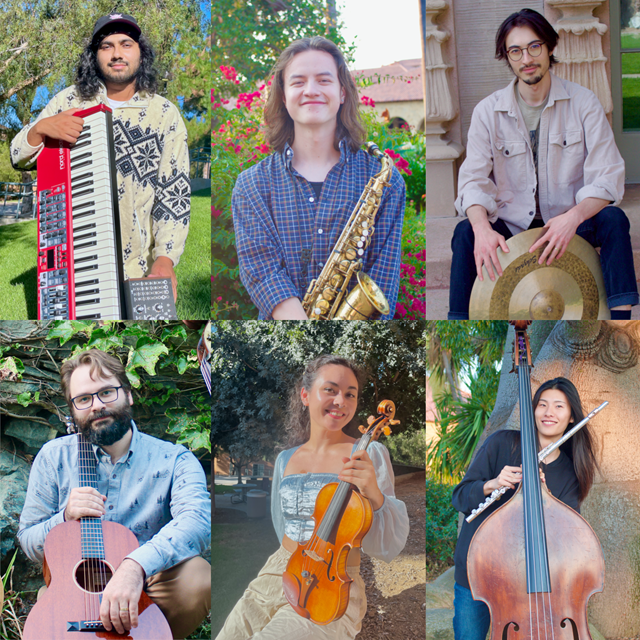
LOBE’s debut album ‘was that on purpose?’ captures the group’s playful, jazz-rooted chemistry, moving from the high-energy turns of “Sucker Punch” to the elegant sway of “Hummingbird Dances” and the nocturnal warmth of “moon jelly.” We spoke with the collective about shaping these moments, the dynamics behind their collaboration, and the surprises that fueled the record.
The album opens with “Sucker Punch,” which immediately grabs the listener with its dynamic tonal shifts — moving between vibrant jazz sophistication and guitar-laden atmospheric intrigue. What was the spark for that track, and how did it come together as the opener for the record?
Nolan: This one was actually my first full jazz composition and ties together many fragments of ideas that have grown with both me and the band over time. When I first started writing in 2017 all the way back in highschool, I just had an idea for the A section. I formalized it more with a group in sophomore year of college in 2019 and orchestrated for more melodic voices in 2022, and we recorded it multiple times between 2022 and 2024 and ended up incorporating Sam on violin and adding Mark’s guitar swells for texture. The song got its name from our previous bassist, Joe Goldfrank, who always perceived the A section’s turnaround as a “sucker punch” due to the feeling that a beat was cut off somewhere.
Because it was one of our earliest songs, it made sense to start with it, and we also liked that it gave the feeling that the album was already in progress when it started. We usually start Sucker Punch with a piano intro, but the intro on the album felt more fitting as a closer given its affect, so we made the album a big circle.
Improvisation feels central to LOBE’s sound, referenced in the album’s title, also clearly guided by attentive listening and shared intuition. How do you balance structured composition with spontaneous interplay when creating a track?
LOBE would for sure not be LOBE without improvisation, and we always include sections of songs that are vehicles for allowing ideas to flow in the moment. In some ways our songs are similar to a lot of jazz compositions. We have written-out, defined ideas and freer interpretive sections where we improvise over the chords and related structures that the written-out sections help establish. Perhaps different than a lot of jazz artists is that our songs often have longer written-out sections for developing ideas, though even these contain parts that are largely open to interpretation by the rhythm section (bass, drums, guitar, piano).
“Hummingbird Dances” casts a more elegant spell, with gentle rhythmic pattering, layered woodwinds, and tranquil piano. How did that track’s creative energy arise, and how does it sit alongside the more high-energy moments on the album?
The idea behind Hummy was to write a fun, lighthearted song. Mark plays a lot of old-time / bluegrass music outside of LOBE, and Daiki also really enjoys folk music, Daiki and Michael really enjoy listening to J-pop and disco, so the goal was to come up with a creative way to mash all of these elements together into a cohesive song. Folk music and disco are both communal dance music of different historical eras, so the theme of “dance music” and “community” became a sort of through-line that ties the different sections together. The way we build energy in Hummy is maybe more controlled than other songs on the album and adheres more to the idiom of dance music in that there’s always a consistent clave or pulse. This makes for a more danceable feel compared to other tracks that stray from metric regularity
Your long-term friendship seems to shape your musical dialogue. How does knowing each other so well influence the way you take risks or experiment in the studio?
The studio is interesting for us because we really value the room for spontaneity that live performance provides. We try to preserve that openness in our studio recordings by using full-band takes as much as possible, because of how deeply we influence each other. We’ve also made peace with hitting the record button over and over and over: allowing for “failure” means we have the space to take risks when recording and preserve as much of our collective real-time decisionmaking as possible.
Do you have a typical process for writing songs? Does it start with one instrument or player, or does it arrive within a more jam-friendly spontaneous session?
Because we know each other on a personal level really well, and because we’ve been playing together for so long, the compositional ideas we generate are already bespoke for the members in some sense: the way we write already keeps each person’s voice in mind from the start. We tend to write for the people, and not just for the instrument.
For whatever reason, all of us who write (currently Daiki, Nolan, Michael, and Ethan) all write from the piano, so the process always starts with someone sitting at a piano, getting lost in ideas. Typically, one of us will then bring in a tune at some stage of completeness (ranging from
bare sketches to almost-full through-composition), and we’ll play through it and workshop whatever parts are there. Sometimes the person who brought it in is looking for specific feedback to develop some section, in which case we’ll experiment and bounce ideas around until something sticks. More often than not, the band makes the songs sound ten times better than what we initially imagined in our heads, and this is always a magical feeling. This willingness to change our ideas during rehearsal allows for our compositions to grow organically around each musician’s input and abilities.
“Moon Jelly” is particularly memorable for its progression from nocturnal, lounge-like jazziness to a passionate saxophone section in the second half. How did that arc develop, and was it always part of the plan?
Moon Jelly was written to contrast many of our songs, which tend to be a little frantic and energetic. We really wanted to evoke the feeling of being in the jellyfish section of an aquarium – the atmosphere of the jellyfish section always feels like you are transported to another world. Calm and slow, floaty, and gentle, a little bit chilly, dark room with blooming blue/purple/pink lights, etc. They live in groups but they seem a little bit lonely, all of them doing their own thing. The arc naturally arose in the studio – Ethan decided to play very passionately and the rhythm section really supported him. So I guess it wasn’t on purpose?
Your playful reinterpretation of The Beatles’ “Ob-La-Di, Ob-La-Da” blends intricate rhythms with a sense of nostalgia. What drew you to this song, and how did you approach reshaping it for your collective sound?
Though the rhythms and harmonies differ greatly from the original, this arrangement actually came very naturally. We tried to be maximally playful in this song and make it full of surprises, so it’s constantly shifting and morphing in and out of the core 11-beat feel, even moving between feeling different groupings within 11 beats (a “small” 11 with sixteenth notes divided into 4+3+4 and a “big” 11 with eighth notes divided into 5+6). We also focused on not only making the arrangement really creative but to also make all these sections feel cohesive and obvious, like “oh, of course the LOBE version of Ob-La-Di sounds like that!”
The final groupings and feel came together after a rehearsal that only Daiki and Michael could show up to, at which Daiki brought in an early version of the song in some odd meter that we don’t remember. Michael suggested another feel (9 beats split in 5 and 4) which we didn’t end up going with, but it helped Daiki figure out the final Ob-La-Di version you hear on the album.
The album title poses an intriguing question about intention versus chance. How do you navigate that tension as a group?
Straddling this divide is at the core of our improvisatory practice. Because we all know each other so well, whenever we take chances in the moment, we can almost see through the actions into the intent behind them. This hiveminding allows for incredible real-time variety and spontaneous decisionmaking in our live shows.
For example, one time, Ethan accidentally started one of our songs (“set time”) in a different key. Nolan seriously considered transposing in real time to match but decided against it, and somehow Daiki was able to discern this mental waffling in the moment and was ready to accompany as needed. This ability for us to think on our feet together represents the joy of chemistry and collaboration we all feel when improvising as a group.
What’s your favorite venue to perform at?
Small, intimate venues are our favorite: places where we can see each audience member and hear each other acoustically; places geared towards attentive listening; acoustic spaces that allow both soft and loud dynamics to be heard clearly; we’re maybe being obtuse here by not giving names, but many places fit this description. Shoutout to Bird and Beckett (a combination bookstore/live music venue) for their exemplary sound management and fair-wage practices and to our friend Taylor Goss for hosting professional-grade yet cozy house shows, complete with vibe-ee-y lamps in the backyard.
If you could collaborate with any artist, alive or dead, who would it be?
We have too many dream collaborations between us all to go into all the details, so here’s a list with no explanation:
Nolan:
- Alive: Sam Gellaitry/Salami Rose Joe Louis
- Dead: Ahmad Jamal/Joe Henderson
Sam:
- Alive: Willow Smith/Bells Atlas
- Dead: Amy Winehouse
Michael
- Alive: Tigran Hamasyan/Matthew Stevens
- Not dead, but not playing anymore: Eberhard Weber
Daiki:
- Alive: Joni Mitchell
- Dead: Chick Corea
Ethan:
- Alive: Daft Punk
- Dead: Mac Miller
Mark:
- Alive: Bill Frisell
- Dead: Stan Rogers
What’s on the horizon next for the project?
Since recording “was that on purpose?”, we actually have written a backlog of songs that we’re excited to get recorded and released. We encourage any member of the band to bring in new music, and the new batch was written by more of the members of the band (a few by Nolan and Daiki of course, but also a couple by both Michael and Ethan). Expect more of that signature LOBE texture and playfulness, but with more of our individual compositional voices.
We also plan on continuing to tour in the near future, hopefully on the East Coast and again in California upon release of our second album!