


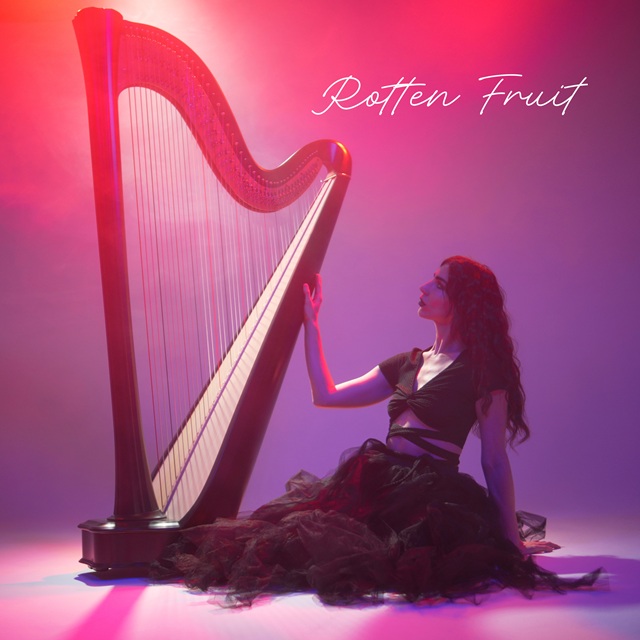
A captivating blend of intricate harp arrangements and melodic folk-pop, Stephanie Babirak‘s new album Rotten Fruit masterfully explores morality and identity. The album charts a poignant journey of untangling inherited behaviors, recognizing harmful patterns from within, and finding the honesty to see situations exactly as they are. Written and recorded with guitarist Peter Scoma and produced by Joshua Benash, it delivers a deeply moving, beautifully produced listening experience.
“The album name comes from that Biblical idea that you can judge a tree by its fruit, meaning that you understand something by what it actually produces rather than what it claims to be,” Babirak explains.
“A lot of the record is me trying to understand where that “badness” lives. Is it something inherent in a person, or is it something that develops over time through family, environment, and repeated patterns? And how do you recognize it clearly when you are inside of it? That question shows up in different ways across the album, in my life as a person, a partner, and an artist.”
A consuming blend of elegant harp and jangling guitars stir on opening track “Apocalypse,” whose foreboding title contrasts with a lushly magnetic pop appeal. “With you, apocalypse is easier to bear,” Babirak’s vocals delight, casting a smitten state amidst poignant observations of a tech-mad society. “ChatGPT’s gonna eat me when it gains sentience,” the vocals intermix these grim accounts of reality, and a potential looming end-of-days, with “good old fashioned love affair” perspectives of romance. “We’re on a sinking ship, everything feels broken… except for you,” a punctuating, heartrending sequence lets out. Right away, Babirak’s penchant for affecting songwriting is on full display. Excelling with its soft acoustics and harp additions as well, “Waves and Whispers” continues that sense of adoration, as the warming duet of Babirak and Scoma proclaim “I think of you in everything I do.”
That track’s string-touched conclusion carries serenely into “Hey Cain,” where somber strings, twinkling harp, and caressing acoustic strums build beautifully amidst Babirak’s compelling vocal escalations. “Your love don’t look like mine,” her vocals turn into a more decisive realization, following the initial tracks’ more infatuated demeanor with a decision to move on from a relationship. “I’m finding it hard to believe, I cannot seem to make peace,” layered vocals exude, capturing the breathless state of love’s ebbs and flows, and ultimately a new openness to possibilities that may conflict with preconceived notions.

A thematic centerpiece for the album, “Waterline” is exemplary of how artfully Babirak examines morality and identity in the context of toxic obligations. Rooted in the framework of judging a bond by what it produces, like a fruit-bearing tree, the track rejects superficial loyalty when a relationship is “rotten with blight,” choosing self-preservation over the demand to appease a destructive cycle. References to “bad blood” and clear water present dichotomies of clarity, with the various vocal layers and frolicking harp making for an enveloping sound, reminiscent of Joanna Newsom in its poetic lyricism and harp infusions.
The ensuing “Lakeside” gives off a darker intrigue in its chilly vocal harmonies and eerie strings, also tackling identity amidst the confusing aftermath of a relational collapse. A desperate yearning for reinvention, pleading to “find the missing puzzle piece / tell me how to create a new reality” strives to escape a cycle of broken communication. The track’s midpoint, with its electric guitars and cinematic strings, is especially enthralling. Elsewhere, “Utah” moves back into dreamier territory, with lulling strings and harp accompanying a question of “does the story change?” when one uproots their life, discovering that true reinvention requires internal transformation, rather than just a different geographic backdrop. Abundant in excellent songwriting and introspective themes, Rotten Fruit is a stirring success of an album from Stephanie Babirak.