

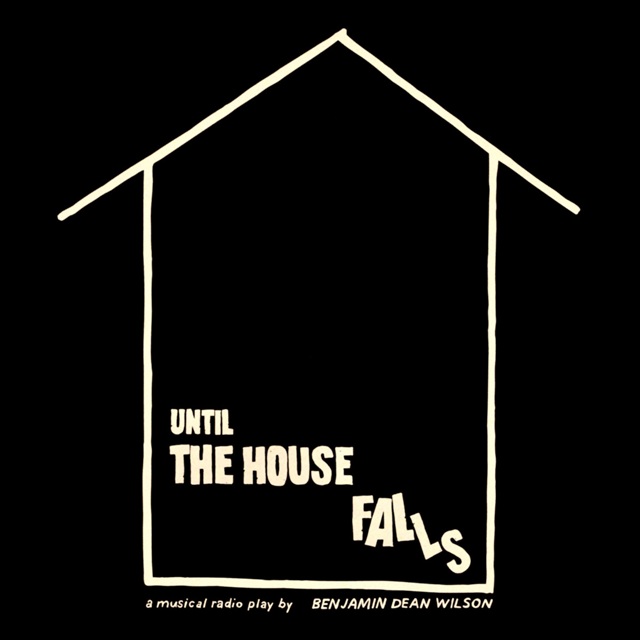
Blending cinematic flair with theatrical wit, Benjamin Dean Wilson crafts an ambitious “film for the ears” on Until the House Falls. Inspired by sheltering from a tornado in his Oklahoma home, the project unfolds as a four-part radio play, fusing progressive folk rock, vaudeville, indie, and musical theater into a sweeping, character-driven narrative. We spoke with Wilson about building story first, balancing humor with drama, and translating visual instincts into purely sonic form.
Until the House Falls plays like an expansive audio drama, blending progressive folk rock, vaudeville, indie, and musical theater into one interconnected narrative. When structuring the project, did the story or the music come first?
For the most part the story came first. Basically I started with three or four connecting songs and ideas which formed the basis of the project. From there I started building an outline for the full play. Next I filled in the outline with the songs that were needed at certain parts of the story. Lastly I wrote the scenes which connected the songs.
The release unfolds as a four-part radio play alongside standalone song versions. How did your songwriting and arrangement process differ when crafting music meant to function both narratively and independently?
I don’t feel like my process changed too much. The first consideration for the music was for it to move the story along, but if there was a way I could make a song work as a stand-alone number then I definitely tried to lean into that as well. An example of this is the song “Home in the South,” which I felt could work in both ways. For the narrative version of the song there is a musical interlude where the characters have spoken lines, there is narration, sound effects, etc. But during the standalone version of the song there is just the musical interlude without the dialog, narration, or any of the other elements.
The opening “Tornado!” introduces listeners to a cinematic world of characters, sound effects, and shifting perspectives. What were the biggest creative challenges in translating visual storytelling instincts into purely sonic form?
I had to explain things a bit more than I would in a visual art form. In some ways it felt like I was writing for a minimalist theater production which took place on a blank stage without any props. Instead of the audience seeing the location, the script, actors, and sound design would have to describe the location in a way that invited the audience to use their imagination and go along for the ride.
Having a background in filmmaking and musical storytelling, how did your experience directing films influence pacing, character arcs, and dramatic tension throughout the album?
I wrote the entire first draft of the project in the exact same way I would write a film. It wasn’t until later drafts that I realized this project would work better as a radio play and began adjusting it for that medium. So everything that I would have done for a film in terms of story, pacing, and dramatic tension I did for this radio play as well.
Tracks like “Busy Day” and “Sleepless Night” move quickly between tonal shifts — from humor to tension to theatrical bravado. How do you maintain cohesion while navigating such dynamic stylistic turns?
In life things can go from funny to ridiculous to dramatic in a number of seconds so it felt natural to have those types of tonal shifts in the radio play as well. I felt that if the story, music, acting, and all the other elements were working then the cohesion of the project would come together on its own.
The project features a wide cast of characters with distinct personalities and musical identities. When composing, do you assign specific sonic palettes or instrumentation to different roles within the story?
Yes and no. I probably did have some specific palettes that were assigned to different characters although it wasn’t exactly a conscious decision. I was constantly tweaking the arrangements for what I thought sounded best for the performers’ unique voices. If different voices were cast in this production I’m pretty sure I would have arranged the songs differently to fit their voices.
The album balances sardonic humor with darker dramatic undercurrents. How do you approach that equilibrium so the comedy enhances, rather than undercuts, the emotional stakes?
Actually I thought about that in reverse. I saw the play first and foremost as a comedy. There are dramatic parts throughout but I tried to keep them relatively humorous (in tone at least) to match the overall silliness of the concept. A fun, dark, little operetta.
If you could collaborate with any artist, alive or dead, on a theatrical or concept-driven project, who would it be — and what kind of production would you envision together?
Dead: Maybe Bob Fosse. I have no skill in dancing or choreography and think it would be cool to write some songs that could come alive through that art form.
Living: Maybe Eteri Tutberidze and/or Kamila Valieva. Some kind of ice skating musical about the 2022 Olympic controversy.
After venturing into audio drama with Until the House Falls, what creative directions feel most exciting moving forward: more narrative-driven releases, film projects, or entirely new musical experiments?
The decision to work on one type of project over another has to do with what assets I can get a hold of and what opportunities are available at the time. Sometimes things line up and it feels like a great time to get a bunch of people together and work on a huge year-long film project and sometimes it feels more natural to work on a small album where I play all the instruments myself. Sometimes it’s something in-between. Different projects feel equally exciting to me in different ways.