

Most artists drop a song and hope for the best. The ones who build a sustainable career do something different: they design a system. That system is the music marketing funnel, and this guide breaks down every stage with real metrics, tactics, and tools independent musicians can use right now.
What Is a Music Marketing Funnel for Independent Artists?
A music marketing funnel is the step-by-step process that moves a cold listener from first discovering a song to becoming a paying, loyal fan. The marketing funnel describes the fan journey stages, and in the music industry, it is less about a one-time purchase and more about building a long-term fan base through repeat engagement across platforms.
For indie artists, a clear funnel connects short-form social content, streaming platforms, email marketing, live shows, and offers like merch and ticket sales into one cohesive strategy. Boost Collective fits into this system as a top-of-funnel and mid-funnel traffic driver through playlist promotion campaigns and targeted music promotion.
The main funnel stages covered in this article:
- Awareness: strangers see your name for the first time
- Interest: they watch longer, click through, listen to a full track
- Consideration: they follow, save songs, and begin exploring your catalog
- Desire: they feel compelled to keep your music in rotation and share it
- Retention: they stay engaged across releases over months
- Loyalty: they support you financially and become informal promoters
How Does a Music Marketing Funnel Actually Work Today?
A music marketing funnel tracks a fan journey in five words: see you, like you, trust you, support you, come back. Each stage requires tailored marketing strategies and different success metrics instead of chasing a single viral moment.
The concrete flow in 2024-2026 looks like this:
- TikTok, Instagram Reels, or YouTube Shorts (discovery)
- Spotify or Apple Music (stream and save)
- Follow or subscribe on one platform
- Join email list or SMS
- Purchase merch, tickets, or memberships
- Re engage with new releases and share with friends
Here is the truth most people miss: viral content doesn’t always lead to increased consumption. Artists who design their funnel outperform those who only “drop and pray” with random releases. The rest of this post is a practical breakdown you can follow step by step.
What Are the Stages of a Music Marketing Funnel in the Music Industry?
The six stages of an effective music marketing funnel are Awareness, Interest, Consideration, Desire, Retention, and Loyalty. This framework adapts the classic marketing funnel to real listener behavior across platforms like Spotify, TikTok, YouTube, Instagram, and live shows.
- Awareness: “I’ve seen your name somewhere”
- Interest: “That clip was good, let me hear more”
- Consideration: “I followed them and saved a few tracks”
- Desire: “I need this song in my rotation”
- Retention: “I check for every new release”
- Loyalty: “I buy merch, attend shows, and tell my friends”
Awareness is the first stage of the marketing funnel, and the funnel narrows as fans progress towards loyalty. Fans move from awareness to advocacy in the funnel. The journey is not always linear. Someone might discover you at a live show, then go backward to streaming and social media. Each section below goes deep on one stage with metrics and tactics.
How Do You Build Top-of-Funnel Awareness for Your Music?
Awareness is about maximizing touchpoints so your target demographic sees you repeatedly across platforms. The goal is not a single impression but familiarity built over many interactions. Research suggests 84% of Billboard Global 200 songs in 2024 had a TikTok viral moment first, showing where discovery actually begins.
- Create “thumb-stopping” 5-15 second hooks from your strongest chorus or intro for short-form content
- Focus on one social media platform for awareness generation rather than spreading thin across five
- Run small TikTok or Instagram ad tests to amplify your best-performing organic post
- Use music promotion platforms like Boost Collective as awareness accelerators via playlist promotion, without expecting guaranteed streams
- Maximize touchpoints to increase fan awareness and interest. Aim for 7-15 impressions over weeks, which dramatically improves recall compared to a single spike

How Should You Define and Find Your Target Demographic at the Top of the Funnel?
Demographic and psychographic targeting is how you stop marketing to “everyone” and start building a real audience. For example, “18-24 hip-hop fans in the US who follow producers like Kyle Beats and care about producer-focused content” is far more useful than “people who like rap.”
- Write down 3 demographic traits: age range, location cluster, preferred genres
- Add 3 psychographic traits: values, lifestyle, online hangouts
- Map where these users spend time: specific subreddits, Discord servers, TikTok hashtags, local venues
- Use analytics from Spotify for Artists, YouTube Studio, and social platforms to validate assumptions with real data
What Awareness Metrics Really Matter at This Stage?
Raw view count matters far less than quality exposure. Track first-time vs. returning viewers for engagement insights, because a growing percentage of returning viewers means your awareness efforts are converting into something deeper.
- Key metrics: unique reach, watch time on short videos, profile visits, “add to playlist” events
- Inside streaming analytics, track top-of-funnel sources like “TikTok” traffic, “Other user playlists,” and “Algorithmic playlists”
- Platforms like Boost Collective can increase exposure in relevant, active playlists grown through targeted ads, feeding awareness and discovery
- Good awareness sets up later funnel wins like saves, followers, and email signups rather than being a vanity metric
How Do You Turn Awareness Into Genuine Interest in Your Artist Brand?
Interest is when a listener does more than skip past a clip. They watch longer, click to your profile, or listen to a full song. This is the stage where most artists lose people because they have no content strategy beyond music clips.
- Use storytelling content (behind the scenes, struggles, recording sessions) to convert cold scrollers into curious viewers
- Track first-time versus returning viewers for better engagement. A rising return rate is a direct connection between your content and growing interest
- Create entry points: pinned posts, highlight reels, or your strongest single featured at the top of your profile
- Design playlists on Spotify or Apple that act as beginner-friendly introductions (“Start Here,” “Best Of [Artist Name] 2024”)
- Consistent branding across platforms (visuals, tone, bio) builds familiarity and turns one-off impressions into a recognizable brand
- Measure saves and completion rates on songs as early signs that interest is forming before fans officially follow
How Can Storytelling Deepen Interest Without Oversharing?
Fans need a story to attach to, but artists control how much they share. You do not need to reveal everything. You need recurring themes that make your music fit into a larger narrative.
- Build 2-3 recurring story themes (e.g. “DIY bedroom producer,” “touring in a 2008 Honda,” “mental health and recovery”)
- Content types that work: short monologues, caption stories under performance clips, before and after comparisons of old demos vs current mixes
- Connect the story to specific lyrics or songs with short explanations
- Include a soft call to action: “If you relate, check the full track on Spotify, link in bio.” This moves listeners down-funnel naturally
How Do You Measure Consideration and Convert Casual Listeners Into Fans?
Consideration is the point where people evaluate whether to stick around by following, subscribing, or adding multiple songs to personal playlists. In selling music, this stage separates casual consumers from emerging fans.
Follower counts can be misleading because many engaged listeners never hit “follow.” Look instead at quiet signals:
- Repeat listeners, skips going down over time, multiple saves per listener, DM replies, and profile clicks
- Build a cohesive catalog and consistent release strategy that rewards binge listening
- Create mid-funnel content like track breakdown videos, acoustic versions, and lyric explainers
- Encourage listeners to follow on one “home base” platform (email list or one main social) rather than chasing follows everywhere
- Playlist promotion campaigns with Boost Collective can support consideration by putting tracks in front of listeners likely to connect with that genre and style, increasing chances of genuine saves
Which Consideration Metrics Should Independent Artists Focus On?
Followers are not everything. Monitor save rates as a key growth metric. A song with 10,000 streams and a 9% save rate is often stronger for long-term fan growth than one with 50,000 streams and a 3% save rate, because high saves trigger algorithmic carry that compounds reach.
- Streams per listener and listeners per release over 30, 60, and 90 days
- Save rate (saves divided by listeners) as a mid-funnel indicator. Charting indie tracks show a median save rate of about 6.8%
- Playlist adds by users, not just editorial or algorithmic lists
- Website click-throughs, email signups, and smart link click distribution by platform
- Campaign reports from services like Boost Collective and your DSP dashboards help track these mid-funnel signals
Why Is “Desire” the Turning Point, and Why Is Save Rate Your North Star?
Desire is when a listener not only likes a track but feels they need to keep it in rotation and share it. Fans who save your track signal desire for more. In 2024-2026, save rate on DSPs is one of the most powerful signals to algorithms that your song should be pushed to more people.
- Save rate = (saves / unique listeners) x 100. If 680 out of 10,000 listeners save your track, your save rate is 6.8%
- Tracks with save rates above 7% tend to compound in reach via Discover Weekly and Release Radar. Below 4.5%, algorithmic lift rarely happens
- The more saves, the better your long-term growth
- Tactics to increase desire: pre-chorus hooks, strong intros, relatable lyrics, and versions optimized for TikTok and Reels
- Encourage soft CTAs in content asking listeners to save if they enjoyed the track, without sounding spammy
- Targeted playlist pitching through Boost Collective can put songs in front of listeners more likely to save them, while results vary by genre, assets, and market demand

How Can You Design Releases to Maximize Desire and Saves?
Release strategy is a core part of the funnel, not an afterthought. Use your music release checklist to plan each stage of the rollout.
- Stagger content around each release: teaser clips, pre-save pushes, live previews, and follow-up performance videos after launch
- Optimize key assets (cover art, title, description) to match your target demographic’s tastes
- Lead with your most “playlist-friendly” track before deeper cuts or a full album
- Consistency in releasing music keeps the marketing funnel active. Aim for a release every 6-8 weeks so algorithms see consistent activity and quality stays high
- Analyze A/B testing results to measure campaign effectiveness across different content formats and hooks
How Do You Retain Fans and Turn Them Into a Long-Term Fan Base?
Retention means keeping listeners engaged over months and years, not just during one single cycle. It is cheaper and more sustainable to re engage current fans than to constantly chase new ones at the top of the funnel. People forget quickly when you go silent between releases.
- Independent artists should focus on building an email list as a valuable asset. It is the one channel no algorithm can take away
- Utilizing platforms like Discord or Patreon can foster community among fans and create a direct connection beyond social media
- Post consistent “free value” content between releases: live streams, Q&As, demos, polls, and behind-the-scenes updates
- Communicate effectively to maintain excellent fan relationships. A short update every week beats silence for three months
- Encourage fans to follow you in at least two places so you are not fully dependent on algorithm changes
What Retention Metrics Show That Your Music Marketing Funnel Is Healthy?
Healthy funnels show repeat behavior: repeat streams, repeat opens, repeat clicks. If your numbers spike and crash with every release, the middle of your funnel is leaking.
- Measure streams per listener to assess fan retention. This single metric reveals whether the same people keep coming back
- Monitor email open rates, click-through rates, and subscriber churn after release announcements
- Track shares to evaluate organic growth of your music. Shares are a leading indicator of word-of-mouth momentum
- Set simple retention goals like “50% of last release’s listeners return within 30 days”
- Watch for warning signs: big first-week spikes with rapid drop-offs and no growth in core engaged audience
How Do You Build Loyalty and Monetize Your Deepest Fans?
Loyalty is about converting fans into active supporters who financially back artists through streams, tickets, merch, crowdfunding, and word-of-mouth. Loyal fans are numerically the smallest group but drive the majority of revenue and long-term stability for a music career.
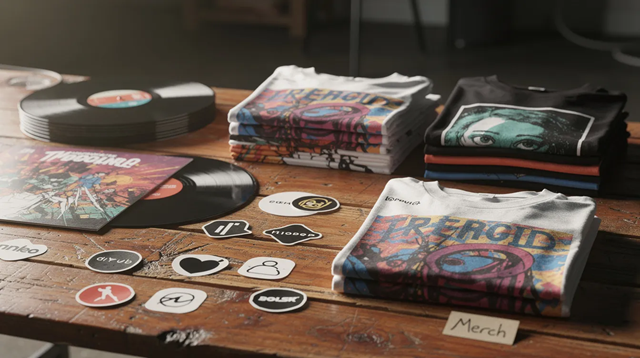
- Design “laddered” offers: digital downloads, physical merch, vinyl, limited drops, VIP experiences, and membership communities
- Offer incentives like exclusive content to enhance listener commitment
- Track cross-selling: people who stream, buy merch, and attend shows using Shopify tags, Bandcamp data, or ticketing reports
- Run limited-time campaigns (“first 100 vinyl copies signed,” “2026 tour supporter bundle”) to reward superfans
- Engaged fans are more likely to share your content. The loyalty stage feeds back into awareness because superfans post UGC and become informal promoters
How Can Independent Artists Coordinate Their Ecosystem for Higher Loyalty?
Loyalty improves when all parts of your business pull in the same direction. Map a simple ecosystem: streaming, social, email, live, merch, and marketing partners like Boost Collective.
- Plan campaigns that connect these parts: a single tied to a tour run and exclusive merch drop
- Align messaging and visuals across all partner campaigns in a given release cycle
- Every big release should have a clear “superfan moment” like a limited bundle or small venue release party
What Does a Complete Music Marketing Funnel Look Like in Practice?
A realistic fan journey looks like this: someone discovers a 12-second clip on TikTok, saves the track on Spotify, follows on Instagram the next week, joins the email list after seeing a music marketing post about a 2025 tour, buys a ticket and T-shirt, and later supports a crowdfunding campaign for the next album.
Start with one or two weak stages instead of trying to fix everything at once. Most artists have decent awareness but a broken middle funnel.
Sample Music Marketing Funnel Table for Independent Artists
| Stage | Listener Mindset | Main Channels | Primary Metric | Example Action |
| Awareness | “Scrolling TikTok, heard a hook” | TikTok, Reels, YouTube Shorts, playlists | Unique reach, video views | Sees a 10-second clip and pauses |
| Interest | “That was good, who is this?” | Profile pages, Spotify, YouTube | Watch time, completion rate | Clicks profile, listens to full song |
| Consideration | “I want to hear more” | Spotify, email, website | Save rate, followers gained | Saves 3 tracks, follows on Spotify |
| Desire | “I need this in my rotation” | DSPs, social media, pre-save pages | Save rate, playlist adds | Adds song to personal playlist, shares with a friend |
| Retention | “When’s the next drop?” | Email, SMS, Discord, Patreon | Streams per listener, email open rate | Opens release announcement email, streams new single day one |
| Loyalty | “I’m telling everyone” | Merch store, ticketing, crowdfunding | Sales, UGC shares, cross-platform support | Buys vinyl, attends show, posts about it on Facebook |
How Can Boost Collective Support Your Music Marketing Funnel?
Boost Collective is a music promotion platform that fits into several stages of the funnel, especially awareness, interest, and consideration. It is the most top-rated music promotion service with a 4.3 star rating on Trustpilot and over 1,700 reviews, supported by top music influencers like Kyle Beats.
- The platform focuses on playlist promotion campaigns that match songs with relevant, verified, active playlists grown using targeted ads
- Artists cannot pick exact playlists. Boost Collective does not guarantee specific placements or stream counts but does guarantee bot-free music promotion or your money back
- Track your campaign to see playlist placements with a free account
- Placements often begin within 24-48 hours of campaign launch
- Combine campaign analytics with DSP data to see which tracks resonate and where the fanbase is emerging
- Integrate campaigns into a broader plan that includes social content, email marketing, and live activity
Other companies in the space include Playlist Push, SoundCampaign, SubmitHub, Groover, and YouGrow Promo. Playlist promotion is a common and established part of modern music marketing, and many artists use these services alongside organic marketing efforts.
How Do You Design and Optimize Your Own Music Marketing Funnel Step by Step?
This is the action plan that turns the theory into concrete next steps. Most effective way to begin is with a focused audit, not a total overhaul.
- Audit your current funnel: list all existing touchpoints and metrics you actively track
- Identify the weakest stage using data (strong awareness but low saves? strong saves but poor retention?)
- Choose 1-2 tactics to test for the next 60-90 days focused on that stage
- Set simple numeric goals and review progress every month (e.g. “increase save rate from 5% to 8%”)
Start building with small experiments instead of trying to copy what major labels spend millions on. Partnering with services like Boost Collective can accelerate testing at the top and middle of the funnel by driving more qualified listeners to your music. Explore free promotion tools to supplement paid campaigns without overspending your money.
Is Building a Music Marketing Funnel Really Worth It for Independent Artists?
Yes. A clear funnel turns inconsistent spikes into predictable growth and a more stable income. The median annual income for independent artists is roughly $10,180, and marketers who help artists grow that number do it by building systems, not chasing luck.
- Clearer decisions about where to spend time and budget
- Stronger relationships that make selling music, merch, and tickets easier over time
- Less reliance on algorithms or a single platform
If your objection is “I just want to focus on my art,” the funnel actually protects the time and money you invest into your music by making sure it reaches people. Think in 3-5 year horizons instead of single releases. Map your own funnel today, choose one stage to improve, and consider testing a playlist promotion campaign with Boost Collective as part of a broader, data-driven strategy to help artists grow real audiences.