


Nothing ages a game faster than its sound. A simple beep will take you right back to an entire arcade, and an evocative score will turn the smallest scene into something massive. Sound design matters in browser pokies too, and Slotozilla AU reviews free-to-play pokies and their features, from themes to soundtracks. This article traces game audio through its evolution from primitive electronic beeps to the complex interactive soundscapes of today’s browser games.
The Early Days of Gaming Audio: From Arcades to 8-Bit Music
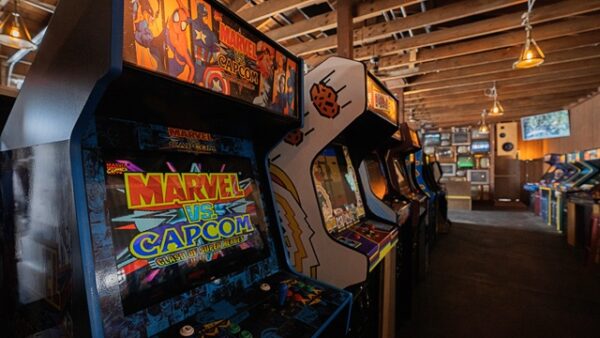
There was little space for sound in early arcade machines. Pong, created by Atari in 1972, serves as a great example. According to NPR’s retrospective, its designer Allan Alcorn produced the sounds by poking around in the circuitry of the machine because there was no off-the-shelf sound source available. The result was a few primitive tones, but they communicated perfectly when the ball was hit by the paddle or went out of the play area.
Space Invaders, released in 1978, showed how much a single sound could do. Its four-note loop sped up as the invaders closed in, and many compare it to a quickening heartbeat. The takeaways from this era were simple:
- Sound had to be cheap, so a few tones did the whole job.
- Audio worked as feedback, confirming hits, misses, and danger.
- Repetition was a feature, since a short loop built pressure without extra memory.
- Hardware quirks shaped sound, as when Space Invaders’ tempo rose with the invaders’ speed.
- Every sound had to be instantly readable, even in a noisy arcade.
- Simple tones became signatures that players still recognise today.
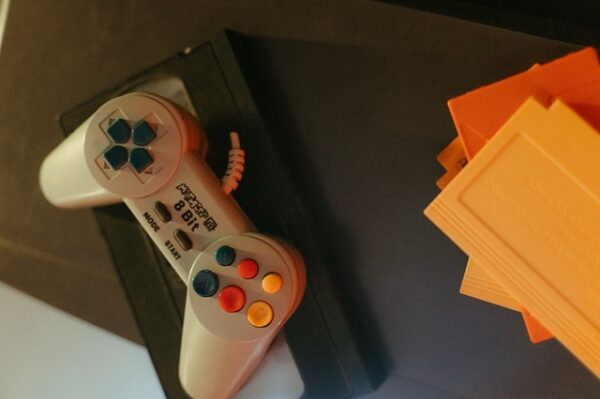
Home systems of the 1980s added real music, but only a few voices could play at once. Composers switched rapidly between notes to suggest chords, and the 16-bit era later brought richer instruments, stereo sound and full-fledged soundtracks.
How Technology Transformed Video Game Sound
The biggest change came when games shifted to discs that could hold pre-recorded music instead of notes triggered by a sound chip. This way, game developers had the opportunity to use actual musical instruments, licensed songs, and full voice recordings. Actors became part of cutscenes, and characters started to talk like humans rather than text boxes. Later came orchestral scores as budgets started rising, adding a cinematic touch to adventure and role-playing games.
Sound effects started changing too. Synthesised blips were replaced by recordings of everyday sounds layered together, a technique that originates from film and is called Foley. The sound of gravel under footsteps, a door squeaking, or armour clinking became actual recordings, making virtual worlds feel physical.
Another shift was less obvious but just as important: music began to respond to the player. LucasArts introduced its iMUSE system with Monkey Island 2 in 1991, letting music change smoothly with on-screen events instead of cutting abruptly from one track to the next. Modern games build on this idea in several ways:
- Layered tracks that add or remove instruments as danger rises.
- Smooth transitions between exploration and combat themes.
- Sound effects that change with the surface, space, or weather around the player.
This kind of adaptive audio means two players can hear different versions of the same score, shaped by how they play it. The music stops being a backdrop and becomes part of the game itself.
What Does Game Audio Look Like in Modern Browser Games?
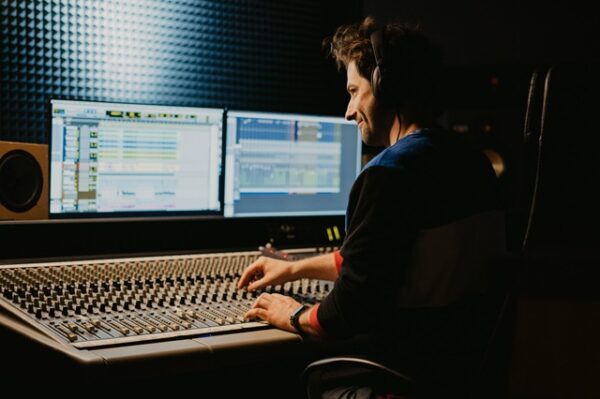
Browser-based games used to rely on rudimentary embedded players and plug-ins, so sound was often an afterthought. Modern HTML5, combined with the Web Audio API, lets developers build a big part of the sound directly in the browser. As per the MDN documentation, the API allows you to play full-length songs, decode sound clips into buffers, and even synthesise sounds from scratch, which is a nice throwback to the beeps of old.
In practice, this means quietly looping music, instant sound effects on clicks or taps, and volume that follows the gameplay, all without downloads. The one catch is that most browsers block sound until the player interacts with the page. As MDN advises, the audio context should be created or resumed during a user gesture.
Besides, playback may depend on browser settings, tab status or device volume, so a well-developed game has clear audio controls and a mute button. These figures show how widespread browser audio is today:
| What | Figure |
| Global users whose browsers support the Web Audio API | 97.4% |
| First browser versions with AudioContext | Chrome 14, Edge 12, Firefox 25, Safari 6 |
| Chrome autoplay policy introduced | Chrome 66, May 2018 |
| Autoplay policy extended to Web Audio | Chrome 71, December 2018 |
Support for game audio in the browser is now almost universal, according to Can I use. The click-to-start rule is younger: Google extended its autoplay policy to Web Audio in late 2018, and other browsers follow similar rules.
Why Sound Remains an Important Part of Gaming
Sound is an unobtrusive yet effective medium. It warns of danger before the player sees it, rewards good gameplay with a satisfying cue, and sets the tone even before the first narrative line is spoken. A mere four-note loop was enough to give Space Invaders its identity, proving what can be achieved with a very subtle use of sound.
The journey from Pong to today’s browsers has made almost anything possible in sound design, yet it also shows how limits can stimulate creativity. With almost unlimited sounds at their disposal, today’s game designers keep using the same techniques employed by their predecessors: clear feedback, good rhythm, and appropriate music.