

Searching for the best music camps in the Inland Empire can feel like digging through rock camps, orchestras, and generic “music appreciation” weeks—without knowing which programs end onstage. We reviewed Summer 2026 schedules and camp pages to surface seven programs that still revolve around live, collaborative playing. We group them by camp type—not rank—so you can zero in fast. Ahead, you’ll see how each camp scores on five parent-check items: band or ensemble placement, on-site gear, final-day performance, recording opportunity, and whether kids bunk overnight or head home for dinner.
The Short Answer: Three Camps Form Rock Bands, Four Build Formal Ensembles

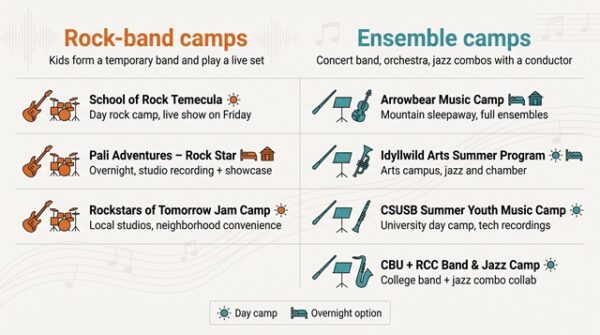
For Summer 2026, seven Inland Empire music camps still guarantee in-person ensemble work, but they split into two clear paths.
Three place kids in a temporary rock band that writes, rehearses, and performs.
Four slot musicians into formal ensembles such as concert band, orchestra, or jazz combo, where a conductor sharpens technique before showtime.
Glance at the grid below to see which road each camp follows, whether instruments or amps wait on site, and if your player heads home for dinner or settles into a bunk.
| # | Camp | Forms a Band? | Gear on Site | Finale | Ages & Format |
| 1 | Pali Adventures – Rock Star | Yes | Yes | Studio + showcase | 8–16 · Overnight |
| 2 | School of Rock Temecula | Yes | Not stated | Live show | 7–18¹ · Day |
| 3 | Rockstars of Tomorrow Jam Camp | Yes | Varies by site | Live show | 6+ · Day |
| 4 | Arrowbear Music Camp | No — ensemble | Bring your own | Session concerts | 9–college · Overnight |
| 5 | Idyllwild Arts Summer Program | No — ensemble | Program-specific | Recitals + recordings | 5–17² · Both |
| 6 | CSUSB Summer Youth Music Camp | No — ensemble | Tech gear only | Concert + recording | Grades 6–12 · Day |
| 7 | CBU + RCC Band & Jazz Camp | No — ensemble | Not stated | Two concerts | Grades 7–12 · Day |
¹The camp serves ages 7–18 depending on the specific program.
²Day workshops accept students as young as 5; the jazz clinic enrolls ages 13–17.
Keep this snapshot handy—we’ll start with the camps that plug kids straight into a rock band.
Rock-Band and Songwriting Camps in the Inland Empire
1. Pali Adventures Rock Star: An Overnight Band Camp With Studio Time
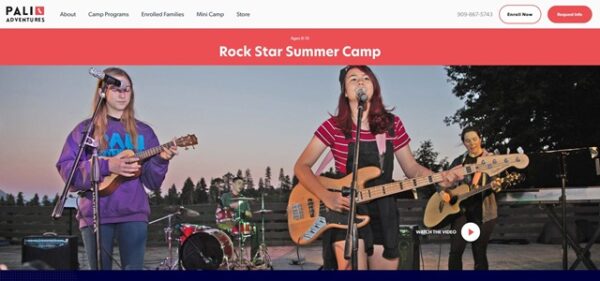
The Rock Star specialty at Pali Adventures puts campers ages 8–16 into small bands that rehearse with working musicians, record a track in the on-site studio, and close the week with a Rock Star Showcase. Guitars, amps, drums, keys, and microphones wait on campus, so no one hauls gear up the mountain. Safety credentials include ACA and WAIC accreditation, LiveScan and U.S. Department of Justice background checks, and staff with first aid/CPR/AED training. Tuition is all inclusive; lodging, meals, activities, and specialties share one price. Pick Rock Star if your musician wants band life plus classic overnight-camp fun.
2. School of Rock Temecula: The Fastest Route From Garage to Stage
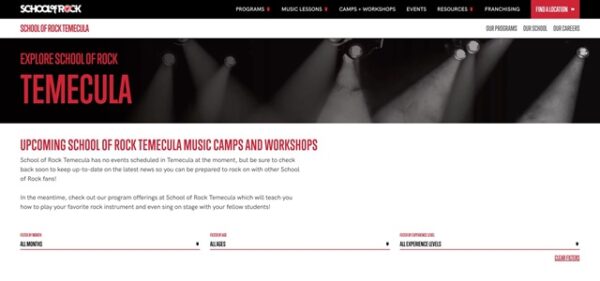
Your child starts on Monday, joins a small rock camp Inland Empire band, and by Friday night plays a ticketed show on the school’s indoor stage. Coaches place students on guitar, bass, drums, keys, or vocals and lead daily rehearsals on classic and modern charts. Short clinics cover tone, stage presence, and ear protection. Ages range from 7 to 18, depending on the session. The camp lists eligible instruments but not backline, so ask whether amps, kits, or keyboards are available. Choose this day program if your player already knows a few chords and prefers to sleep at home.
3. Rockstars of Tomorrow Jam Camp: A Studio Spin on the Band Dream
Across Riverside, Norco, and Chino Hills, lesson studios transform into five-day band labs each summer. Counselors group campers ages 6 and up into small bands that write a short set, rehearse daily, and perform on Friday night under professional lights. The page says “no experience necessary,” yet recommends knowing a song or two; call your studio about true beginner placement. Gear rules vary; some sites supply drums, keys, and amps, others do not. Confirm backline and storage before day one. Choose Jam Camp for neighborhood convenience, current set lists, and a road to the stage without a mountain drive.
Orchestra, Concert Band, and Jazz Camps in the Inland Empire
Ready to swap power chords for crescendos? For Summer 2026, the four programs below focus on formal ensembles such as concert band, full orchestra, chamber groups, and jazz combos. Skilled conductors refine technique and balance before the closing performance.
4. Arrowbear Music Camp: 80-Plus Summers of Mountain Ensemble Training
- Daily structure: morning full-ensemble rehearsals, afternoon sectionals and theory labs, plus informal cabin jams.
- Ages and levels: sessions span late-elementary through early college; placement notes on the camp site spell out audition or part-assignment details.
- Finale: each session ends with a public concert on the rustic main stage.
- Supervision: Arrowbear lists a 1:10 counselor ratio for non-rehearsal hours; the site shows no ACA accreditation, so ask if that matters to you.
- Gear caveat: large instruments such as tuba, cello, and percussion usually travel with the student. Confirm transport or rental well before check-in.
Choose Arrowbear when your musician wants a music-only sleepaway week rich in tradition, mountain air, and a final concert under tall pines.
5. Idyllwild Arts Summer Program: Conservatory Depth Without Conservatory Pressure
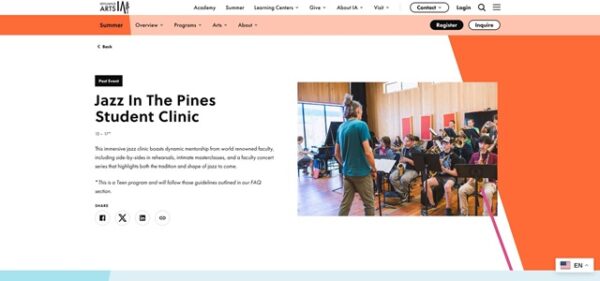
- Ages and placement: day options begin at age 5; residential enrollment and the Jazz in the Pines Student Clinic serve ages 13–17, with some workshops requiring auditions or prepared pieces.
- Daily flow: focused rehearsals in practice huts, coached sectionals, and evening run-throughs on an outdoor amphitheater stage.
- Finale: jazz clinics close with a public showcase, instrumental intensives with polished recitals, and production majors leave with a mixed recording.
- Living options: day students commute; boarders share newly air-conditioned dorms installed for Summer 2026.
- Gear and oversight: students bring their own instruments; production tracks supply recording equipment. No ACA accreditation appears on current pages; ask if that is important to you.
Choose Idyllwild when your young artist wants serious ensemble work, forest air, and late-night jams without the pressure of a year-round conservatory.
6. CSUSB Summer Youth Music Camp: University Faculty, Symphony Coaches, and a Built-In Recording Crew
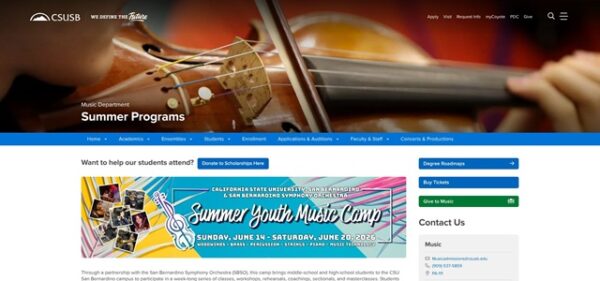
Format: day camp on the California State University, San Bernardino campus
Ages and tracks: middle-schoolers join a combined orchestra-and-band ensemble, while high-schoolers choose string orchestra, wind band, piano, or music-technology majors
Faculty: CSUSB professors plus coaches from the San Bernardino Symphony Orchestra
Tech edge: the music-technology track records every concert, so students leave with a polished multitrack file instead of a phone video
Auditions: at least two years of playing and a short placement video keep parts balanced
Gear: school percussion and tech rigs are provided; bring your own horns, strings, reeds, and accessories
Choose CSUSB if your musician already sight-reads comfortably and wants collegiate-level feedback without an overnight commitment.
7. CBU + RCC Band and Jazz Camp: A Riverside Collaboration for Concert and Jazz Players
Format: five-day day camp split between California Baptist University and Riverside City College
Ages: students entering grades 7–12
Daily flow: morning concert-band sectionals, midday jazz combos, late-afternoon masterclasses on tone, phrasing, and improvisation
Faculty: university directors along with RCC’s award-winning jazz coaches share the podium
Finale: twin concerts (wind ensemble and jazz showcase) give parents clear proof of progress
Gear and oversight: program pages do not list instrument loans or staff ratios; ask directly when registering
Choose CBU + RCC if your school-band musician wants fresh charts and college-level coaching without an overnight stay. Be ready to confirm gear and supervision details, as long-term reviews are still building.
How to Choose the Right Music Camp for Your Child
Skip the glossy brochures and ask each director these five questions:
- Will my child stay with one band or ensemble all week?
Consistent rehearsal time drives real musical progress. - Who places the players, and how?
Find out whether auditions, placement videos, or simple surveys decide parts; smart grouping keeps confidence high and boredom low. - What gear is on site?
Confirm guitars, amps, sticks, reeds, keyboards, headphones, and secure storage to avoid costly surprises at check-in. - What’s the true finale?
A camp-wide concert, studio recording, or parent-only recital each builds a different kind of memory (and résumé line). - How are campers cared for outside rehearsal?
Day camps need clear pickup rules and lunch plans. Overnight programs should publish staff ratios, medical coverage, and accreditation details (look for ACA accreditation if safety credentials matter to you).
Write the answers side by side, and the best-fit camp will stand out.