

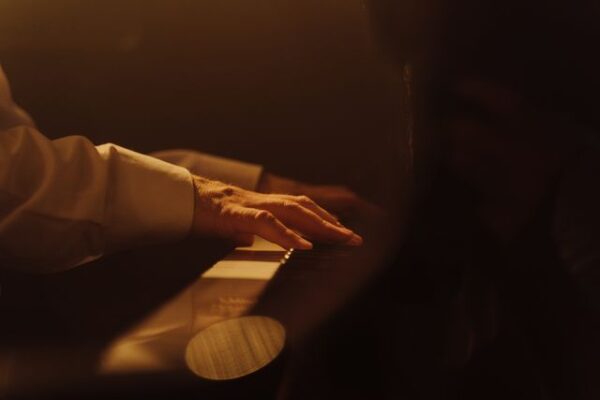
In March 2010, a musician known online as Merton sat down at a piano, opened a webcam chat site, and started improvising songs about whoever appeared on the other end of the call. The clips spread fast. Strangers got a verse built from their own reaction, in real time, with no retakes and no second take once the moment passed.
The site behind those early videos, Chatroulette, soon had a rival called Omegle that worked the same way: click a button, get paired with a stranger, talk or type until one of you leaves. Pianists, guitarists, and singers kept using that pairing model as a stage for more than a decade, right up until the site that made it famous closed for good.
A Stage Built From Strangers
Merton’s early clips set a template that other musicians copied for years. A player sits at a keyboard, takes a name or a song request from whoever appears on screen, and performs it on the spot. Some sessions are polished covers of a pop hit or a video game theme. Others are a one-line joke turned into a thirty-second song about a stranger’s pet or bad haircut. Either way, the appeal is the one that draws people to street performance: no script, no editing, and an audience that can leave at any moment.
That format needed a platform built for one-to-one pairing rather than group chat rooms or curated livestreams, and for most of the 2010s that platform was Omegle. Now that it is gone, anyone chasing the same format has to look elsewhere. LuckyCrush markets itself directly as an alternative to Omegle, pairing users one on one on camera rather than dropping them into a crowd, and it is one of several services that inherited that particular audience.
Why Omegle Suited This Kind of Performance
Omegle launched in 2009, built by Leif K-Brooks while he was still a teenager, on a simple premise: pair two strangers, let them see and hear each other, and give either one an instant exit. That structure mattered for musicians more than it did for ordinary chat. A crowded livestream invites lurking. A one-to-one call forces a reaction, because the other person has nowhere to hide and no one else in the room to defer to.
The randomness did the same work a busker’s pitch does on a sidewalk. Nobody in the chat window chose to hear a piano set that day. They landed there by chance, the way a passerby stumbles on a street musician outside a train station, and their unscripted surprise became the actual content. That same hunger for an unfiltered reaction did not stay confined to piano channels. It shows up in how TikTok reshaped the music charts a decade later, where a stranger’s genuine reaction to a song, captured on camera, still outperforms anything scripted.
The Letter That Ended It
Omegle shut down on November 8, 2023. Its founder, Leif K-Brooks, posted a long farewell letter explaining that moderating an anonymous video chat platform at that scale had become unsustainable, both financially and for his own wellbeing, after years of misuse by a minority of users and mounting legal pressure over how the site handled that abuse. The site had run for fourteen years, long enough for an entire cohort of song-request channels to launch, grow an audience, and eventually move on to something else, all on the same site.
The closure removed more than a chat button. It ended a specific kind of first contact, the few seconds where a musician and a total stranger sized each other up before anything happened, that an entire generation of performers had built channels and careers around. Some of those channels moved on to other formats, cutting reaction footage from newer chat services instead. Others simply stopped uploading, because the one platform that made the bit work was gone and nothing else quite matched it.
Where the Audience Went
Random one-to-one video chat did not disappear with Omegle. It fragmented. Some of that traffic moved to older rivals such as Chatroulette, some to newer and more heavily moderated apps, and some of it drifted toward platforms where streamers act as music tastemakers instead of talking to one stranger at a time, closer in spirit to the synth heavy tracks powering the esports soundtrack boom than to a single piano and a webcam. The people who wanted to keep busking for strangers on camera, rather than watch someone else do it, had fewer places left to go.
For musicians who still want the old format, the pull has not changed. A one-to-one call still produces a reaction that no algorithm can fake, whether the platform is a decade-old chatroulette site or one of the newer video chat services built to fill the gap Omegle left behind. Age verification and moderation are stricter across the board now, a direct response to the problems that shut Omegle down, but the basic trade musicians are making is the same one Merton stumbled into in 2010: play for a stranger, and see what happens.
The Genre Outlived the Site
None of this makes random video chat a music venue in any formal sense. Most sessions on these platforms are ordinary conversation, and most viewers never open a piano app or pick up a guitar. But the niche that Merton opened, treating a stranger’s chat window as a tiny, unbooked stage, kept finding new performers for over a decade, on song requests ranging from anime openings to whatever pop song was charting that month, and it has kept finding them since, just on different services than the one that started it.
What outlasted Omegle was not the company or the brand. It was the format: two people, a camera, and no idea what happens next. That is a small thing to survive a company’s shutdown, but it explains why musicians kept showing up to a chat button long after the novelty of Chatroulette itself had worn off.