

The Live Sports Odds editorial team tracks how digital-entertainment audiences divide their hours and their money, and the numbers around Geese have been difficult to ignore. When the Brooklyn art-rock band released their third album, Getting Killed, in September 2025, they drew a crowd of at least 2,500 people to a free outdoor show the following day — for a band that expected, at most, 500. That same momentum has since booked them two October nights at the 13,000-capacity Forest Hills Stadium in Queens. The fan hours and discretionary dollars flowing toward Geese represent finite resources that every digital leisure category is working to claim. Online sports betting is one such category: fans who follow it closely often keep an odds comparison site open the same way they refresh tour-date announcements, each competing for attention in the same fractured economy of leisure spend.
From Free Shows to Forest Hills in Under a Year
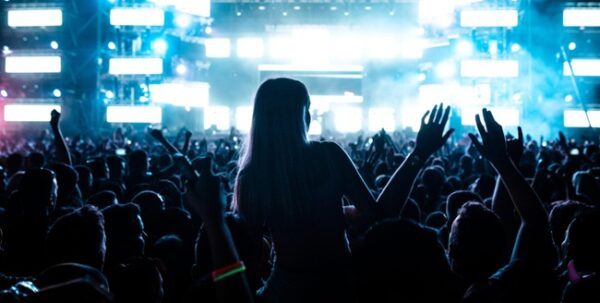
The arc from scrappy Brooklyn act to stadium headliner has compressed unusually fast, according to Rolling Stone. Getting Killed, released through Partisan Records on Sept. 26, 2025, immediately converted into a demonstrable crowd signal. The Greenpoint free show, staged at Banker’s Anchor plaza the day after the album dropped, saw at least 2,500 fans materialize where the band had anticipated a few hundred.
The demand kept building. Geese played the main stage at Governors Ball, their hometown’s biggest music festival, held in Queens in early June. Their Saturday Night Live appearance in January proved even more electric. Performing “Au Pays du Cocaine” and “Trinidad,” they became the show’s most discussed musical guests in recent memory. Some viewers, apparently unfamiliar with the band’s deliberately abrasive energy, wondered aloud whether the set was a comedy sketch.
Now the Getting Killed Again Tour culminates with two October nights at Forest Hills Stadium. For a band that once rehearsed in a Brooklyn basement, the scale is striking.
The Psyop Controversy and the Band’s Rebuttal
The surge in attention attracted scrutiny as well as fans. In March, a digital marketing firm called Chaotic Good became publicly linked to Geese. The firm practices what it describes as “trend simulation,” operating a broad network of farmed social media accounts. In statements to Billboard, Chaotic Good claimed an extensive reach: “We can drive impressions on anything at this point. We know how to go viral, we have thousands of pages.” The firm had previously claimed campaigns for Coldplay and Travis Scott.
On March 31, singer-songwriter and podcaster Eliza McLamb published a Substack titled “Fake Fans.” Two weeks later, Wired ran a report headlined “The Fanfare Around the Band Geese Actually Was a Psyop.” The narrative had enough momentum to become a genuine reputational event.
Geese disputed the characterization. Cameron Winter described the band’s initial reaction as a genuine shock before they got clarity on what had actually happened.
“We were just like, ‘Oh, my God. The whole fucking thing is fake,'” Winter told Rolling Stone. “We were having a meltdown. Then we marched up to our label over email, the relevant team members, like, ‘How long have all our fuckin’ fans been fake, you sons of bitches?'”
After reviewing the actual work, Winter said the reality was considerably more mundane.
“It wasn’t comments or fake fans or bots or anything,” he said. “It was low-effort TikTok posts that were used to boost the algorithm. They showed us samples, and it made me feel better because they were so shitty.”
Bassist Dominic DiGesu offered the most direct response to skeptics: “Come to the show, man. Just come to the show, and fucking tell me how many bots you see.”
A Decade in the Making, Starting in a Fort Greene Basement
The psyop narrative landed against a specific biographical backdrop that the band and their supporters have been quick to invoke. All four members of Geese — Cameron Winter, Max Bassin, Emily Green, and Dominic DiGesu — are now 24. They have been building a fanbase for roughly a decade, having started the band as teenagers.
The origin point is specific. The four connected through Brooklyn schools and the Park Slope Rock School extracurricular program before beginning to play together at 14 in the basement of the Bassin family’s Fort Greene brownstone. They called the space “the Nest.” The timeline places the band’s formation well before any involvement with digital marketing firms, and long before any industry attention found them.
Jack White’s Endorsement and the Band’s Own Complicated Feelings
Not everyone needed convincing. Jack White has described himself as one of Geese’s most vocal supporters, framing their rise in terms that go beyond simple praise.
“Geese, to me, are a real American band, and a real New York band,” White said in Rolling Stone. “The vibe, the attitude, and the execution all feel that way to me.… Them blowing up shows us there is hope.”
Inside the band, the feelings are less tidy. DiGesu captured the ambivalence with some candor: “I’m glad that people have thoughts about our stuff at the end of the day. At least we’re not boring and mid.” Elsewhere, he described looking out at their crowds with something closer to disbelief. “It feels unbelievable,” he said. “We all love playing the shows.”
Cameron Winter has maintained parallel creative activity throughout. A solo show he performed at Carnegie Hall is being released this fall as a live album and a concert documentary directed by Paul Thomas Anderson. Winter has also been working on a studio follow-up to his December 2024 debut solo album, Heavy Metal. The projects suggest an artist who processes the larger maelstrom through additional work rather than stepping back from it.
Lead guitarist Emily Green offered the most forward-looking assessment of where the band actually stands. “I still think we can make better music,” she told Rolling Stone. “Mostly I just think that I’ve lived almost two years since recording Getting Killed, and I’m better at being a human being. We all are. Everyone grew up.”
Two October Nights at Forest Hills, and More Music Ahead
The two October dates at Forest Hills Stadium are the clearest measure yet of where Geese’s momentum sits. Drummer Max Bassin put the band’s posture plainly: “We’re milking this Getting Killed thing for all it’s worth.”
What comes after those shows remains open. Green’s confidence that the band is capable of better work than what already converted 2,500 skeptics into Greenpoint devotees suggests the story has not finished moving yet.